Introduction
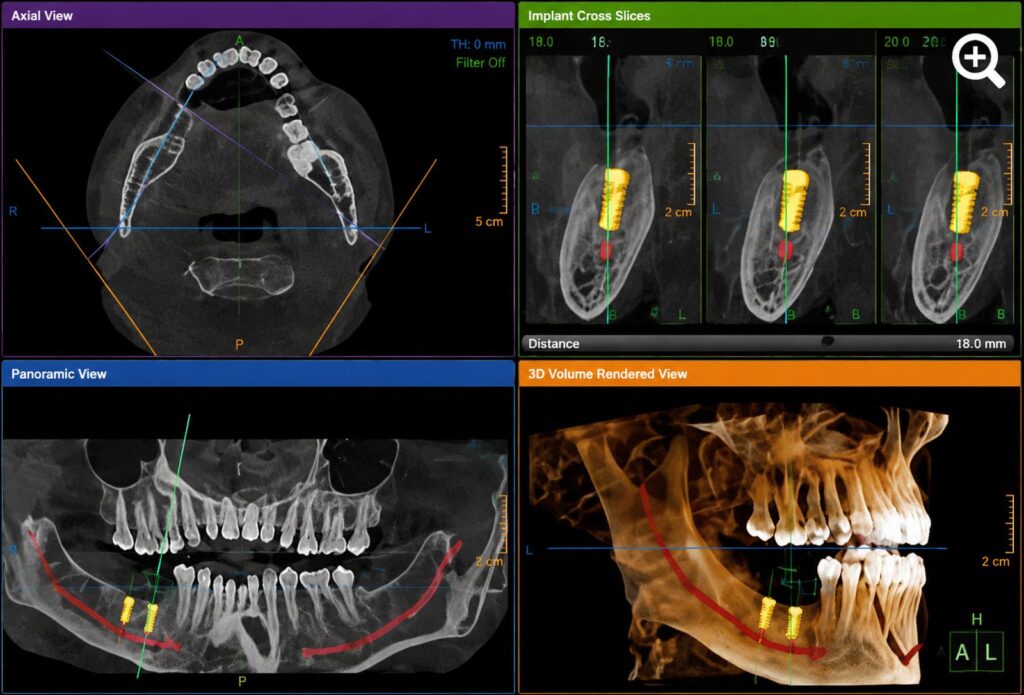
Dental implants help replace missing teeth. Now, with CBCT-guided implants, dentists can plan implant placement with 3D precision. CBCT stands for Cone Beam Computed Tomography. This technology creates detailed 3D images of your mouth. Because of this, dentists can see your teeth, gums, and jawbone from every angle. As a result, CBCT-guided implants offer safer and more accurate results. In this blog, you will learn how 3D dental implant planning works and why it matters for your smile.
What Are CBCT-Guided Implants?
CBCT-guided implants use special 3D scans to plan where dental implants go. Unlike regular X-rays, CBCT scans show a full, three-dimensional view. This helps your dentist see the exact shape and size of your jawbone. Because of this, they can choose the best spot for your implant. In addition, CBCT-guided implants lower the risk of problems during surgery. Many people now ask for CBCT scan for dental implants because it leads to better results.
How Does CBCT Technology Work in Implant Planning?
CBCT technology uses a cone-shaped X-ray beam to take many pictures of your mouth. Then, a computer combines these images into a 3D model. This model shows your teeth, bone, nerves, and sinuses. As a result, your dentist can:
Because of these steps, 3D dental implant planning is much more precise than older methods.
Benefits of 3D Precision for Implant Placement
CBCT-guided implants offer many advantages. For example, 3D precision helps your dentist avoid guesswork. Here are some key benefits:
Because the process is so accurate, you can feel more confident about your dental care. According to the American Dental Association, precise dental implant placement leads to higher patient satisfaction.
Step-by-Step Process of CBCT-Guided Implant Placement
Understanding the process can help you feel at ease. Here is what usually happens:
Because each step is planned, the risk of surprises is much lower.
Safety, Accuracy, and Patient Experience
CBCT-guided implants are safe and reliable. The scan uses low radiation, similar to a few regular X-rays. In addition, the 3D images help avoid mistakes during surgery. Many patients say the process feels smooth and less stressful. Because the planning is so detailed, healing is often faster. The Centers for Disease Control and Prevention (CDC) note that careful planning reduces the chance of infection and other problems.
Frequently Asked Questions
Prevention and Aftercare Tips
After getting a dental implant, good care is important. Here are some tips to help your implant last:
Because you take care of your implant, it can last for many years.
Conclusion
CBCT-guided implants use 3D precision for safer and more accurate dental implant placement. Because of this, you can enjoy a better fit, faster healing, and a confident smile. Consult a dental specialist at Naveen – Arjun Dental to learn if CBCT-guided implants are right for you.