
Introduction
Many people want a straighter smile. Often, they wonder about braces vs invisible aligners. Both options can fix crooked teeth. However, they work in different ways. Braces use metal parts to move teeth. On the other hand, invisible aligners are clear trays that fit over your teeth. Because both choices have pros and cons, it is important to know which is better for you. This guide will help you compare clear aligners vs metal braces and decide what fits your needs best.
How Braces Work
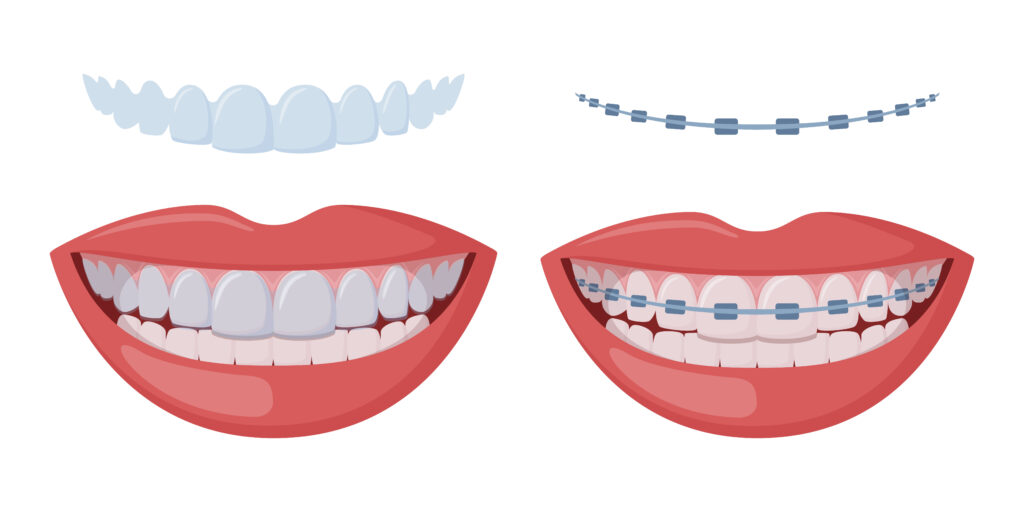
Traditional braces use metal brackets and wires. Dentists glue the brackets to your teeth. Then, they connect the brackets with a wire. Over time, the dentist tightens the wire. As a result, your teeth slowly move into the right position. Braces are often used for children and teens. But adults can get them too. Usually, braces treat crowded teeth, gaps, or bite problems. According to the American Dental Association, braces are very effective for complex dental issues.
How Invisible Aligners Work
Invisible aligners are clear, plastic trays. Dentists custom-make them to fit your teeth. You wear each set of trays for about two weeks. After that, you switch to a new set. Each tray moves your teeth a little more. Because they are clear, most people will not notice them. Aligners work best for mild to moderate dental problems. For example, they can fix small gaps or slightly crooked teeth. Adults and older teens often choose aligners for their discreet look.
Key Differences Between Braces and Invisible Aligners
When choosing between braces vs invisible aligners, consider these factors:
Pros and Cons of Braces
Pros and Cons of Invisible Aligners
Who Should Choose Which?
Deciding between braces vs invisible aligners depends on your needs. For example, children and teens with complex dental problems often need braces. Adults who want a discreet option may prefer aligners. If you play sports, braces may need extra care. On the other hand, aligners can be removed during games. People who forget to wear aligners may get better results with braces. Always talk to your dentist about your age, dental needs, and lifestyle. They can help you choose the best option.
Care and Maintenance Tips
Proper care helps both braces and aligners work well. Here are some tips:
Conclusion
Both braces and invisible aligners can give you a straighter smile. However, each has unique benefits and challenges. While braces are best for complex cases, aligners offer a discreet and comfortable choice for many. In summary, your dentist can help you decide which is better—braces or aligners—based on your needs. Consult a dental specialist at Naveen – Arjun Dental for personalized advice on choosing between braces and invisible aligners.